
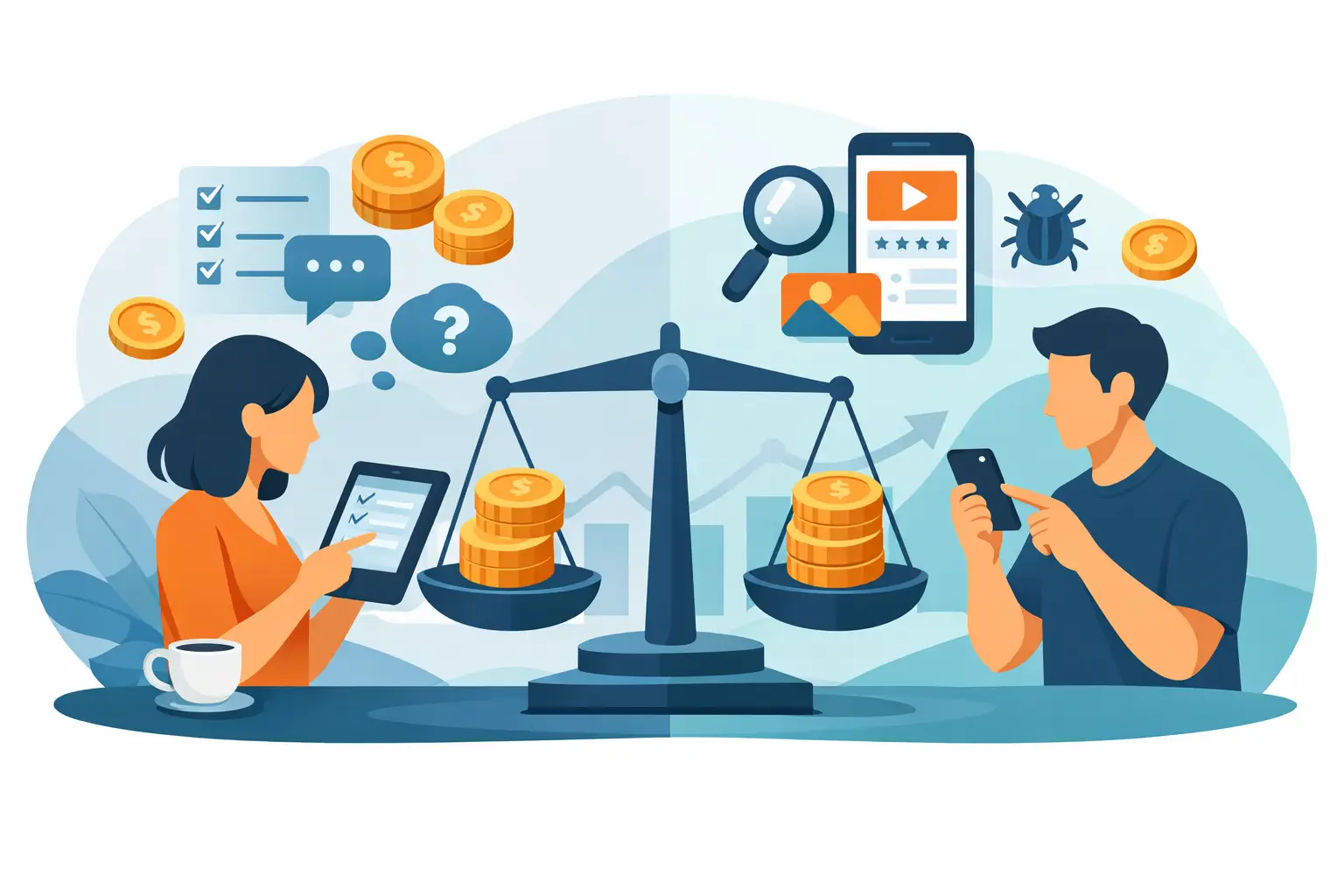
A lot of people start with the same question: if you have an hour and want extra cash online, should you spend it on surveys or on testing apps? The real paid surveys vs app testing decision comes down to one thing – are you chasing easy volume, or better payouts per task?
Both can work. Both are beginner-friendly. But they do not reward your time the same way, and they do not fit the same type of side hustler. If you want quick wins with almost no learning curve, paid surveys have a clear advantage. If you want fewer tasks with higher upside, app testing usually pulls ahead.
Paid surveys vs app testing at a glance
Paid surveys are simple by design. You answer questions, share opinions, complete profile details, and get paid for participation. The barrier to entry is low, which is exactly why so many people start there. You do not need technical skill, special equipment, or much confidence. If you can read carefully and stay consistent, you can earn.
App testing is different. Instead of sharing opinions about products or habits, you interact with an app or website and report what works, what feels confusing, and what breaks. Some tasks are basic. Others ask for recorded feedback, screenshots, or bug notes. The work is still accessible, but it asks more from you.
That difference matters because payout usually follows effort. In most cases, surveys offer smaller rewards more often, while app testing offers larger rewards less often. So the better option depends on whether you value consistency, speed, or earning potential.
How paid surveys make money
Paid surveys are built for scale. You can complete short tasks back to back, and the process feels familiar fast. That makes surveys attractive for people who want repeatable online income without needing to think too hard about each task.
The upside is convenience. You can do them during breaks, at night, or while filling dead time between other online tasks. For beginners, that matters a lot. It is easier to stay active when the task feels low pressure.
The downside is that surveys can be unpredictable in a frustrating way. You might qualify for one survey and get screened out of the next three. Sometimes a task looks worthwhile, then turns into a long series of demographic filters before you know whether you are accepted. That can drag down your effective hourly rate.
Still, surveys make sense if your goal is steady micro-earning. They are especially useful for users who prefer volume over complexity and want a simple way to stack small amounts consistently.
How app testing makes money
App testing rewards observation more than speed. You are not just clicking through screens. You are helping companies understand how real users experience their product. That makes your time more valuable when the test is a good match.
A typical app testing task may ask you to sign up, explore features, complete actions, and explain what feels confusing or slow. Some tests are quick. Others are more structured and pay more because they require detailed feedback. If you communicate clearly and follow instructions well, you can turn a short session into a stronger payout than several surveys combined.
But there is a trade-off. App testing opportunities are not always as frequent as survey offers. You may also need a certain device type, operating system, location, or user profile to qualify. In other words, the pay can be better, but the flow is less predictable.
Which one pays more?
If you compare task for task, app testing usually pays more. That is the short answer.
If you compare total availability, paid surveys often give you more chances to earn throughout the week. That is the part many people miss.
So when someone asks which is better, the honest answer is: app testing often wins on payout per task, while surveys often win on task volume. If you only have one or two open opportunities, app testing may be the smarter use of time. If you want something you can log into daily and start immediately, surveys may feel more reliable.
This is where your earning style matters. Some people want low-friction activity they can repeat every day. Others would rather wait for a stronger offer and spend their time where the return is higher. Neither approach is wrong.
Paid surveys vs app testing for beginners
For total beginners, paid surveys are easier to start with. The learning curve is almost zero. You create a profile, answer questions, and follow prompts. There is very little pressure, and that lowers the chance that you quit after a day or two.
App testing is still beginner-friendly, but it rewards focus. If instructions ask you to narrate your experience or identify points of confusion, vague feedback will not help much. Companies want testers who can explain what happened and why it matters. That means the best testers are not necessarily technical people. They are clear communicators.
If you are brand new to online earning, surveys can help you build momentum. If you are comfortable giving detailed opinions and following task instructions closely, app testing may become your better lane fast.
Time, consistency, and effort
A lot of side hustlers look only at posted payout and ignore the time around the task. That is a mistake.
With surveys, time can disappear in qualification questions, incomplete attempts, and lower-value tasks. The posted reward is not always the same as the real value of your time.
With app testing, the task itself may take more attention, but you are often spending that time on one focused opportunity rather than chasing several small ones. The real advantage is that your effort can be more concentrated.
Consistency also matters. Surveys are often better for building a daily routine. App testing is stronger when you want to maximize specific windows of time. If your schedule is unpredictable, surveys may fit better. If you can sit down for 15 to 30 focused minutes, app testing becomes more attractive.
Who should choose paid surveys?
Paid surveys are a strong fit if you want simple tasks, lower pressure, and frequent chances to earn. They also make sense if you are multitasking across other online activities and want a straightforward income stream you can add without much setup.
They are especially useful for people who value accessibility over payout size. If your main goal is to get started quickly and keep moving, surveys give you that runway.
Who should choose app testing?
App testing is better for users who want to get paid more for attention, feedback, and usability insight. If you can describe your experience clearly, notice friction points, and stay accurate, testing can be one of the more efficient task-based earning options available to beginners.
It is also a smart choice for people who do not want to grind through lots of low-paying microtasks. One decent testing opportunity can make your session feel more worthwhile.
The smartest move is not choosing only one
For most people, the best answer to paid surveys vs app testing is not either-or. It is using both strategically.
Surveys can fill the gaps. App testing can raise your average earnings. Together, they create a better mix of consistency and upside. That is how smarter online earners build momentum – not by relying on one task type, but by stacking multiple simple income streams that fit different moments of the day.
That is also why all-in-one earning platforms stand out. Instead of jumping between disconnected sites, some users prefer one place where they can complete surveys, test apps, and layer in additional earning paths like ad viewing, promotions, and recurring commissions. For people who care about convenience and income diversification, that model simply makes more sense.
The real question to ask before you start
Do you want the easiest task, or the best use of your time?
If you want easy entry and frequent activity, start with paid surveys. If you want stronger payouts and do not mind giving more thoughtful feedback, lean into app testing. If you want the strongest overall earning strategy, combine both and track what actually pays off for you over a week, not just in one session.
Online income grows faster when you stop chasing random tasks and start choosing the ones that match your time, attention, and goals. Pick the path you can stick with, then build from there.