
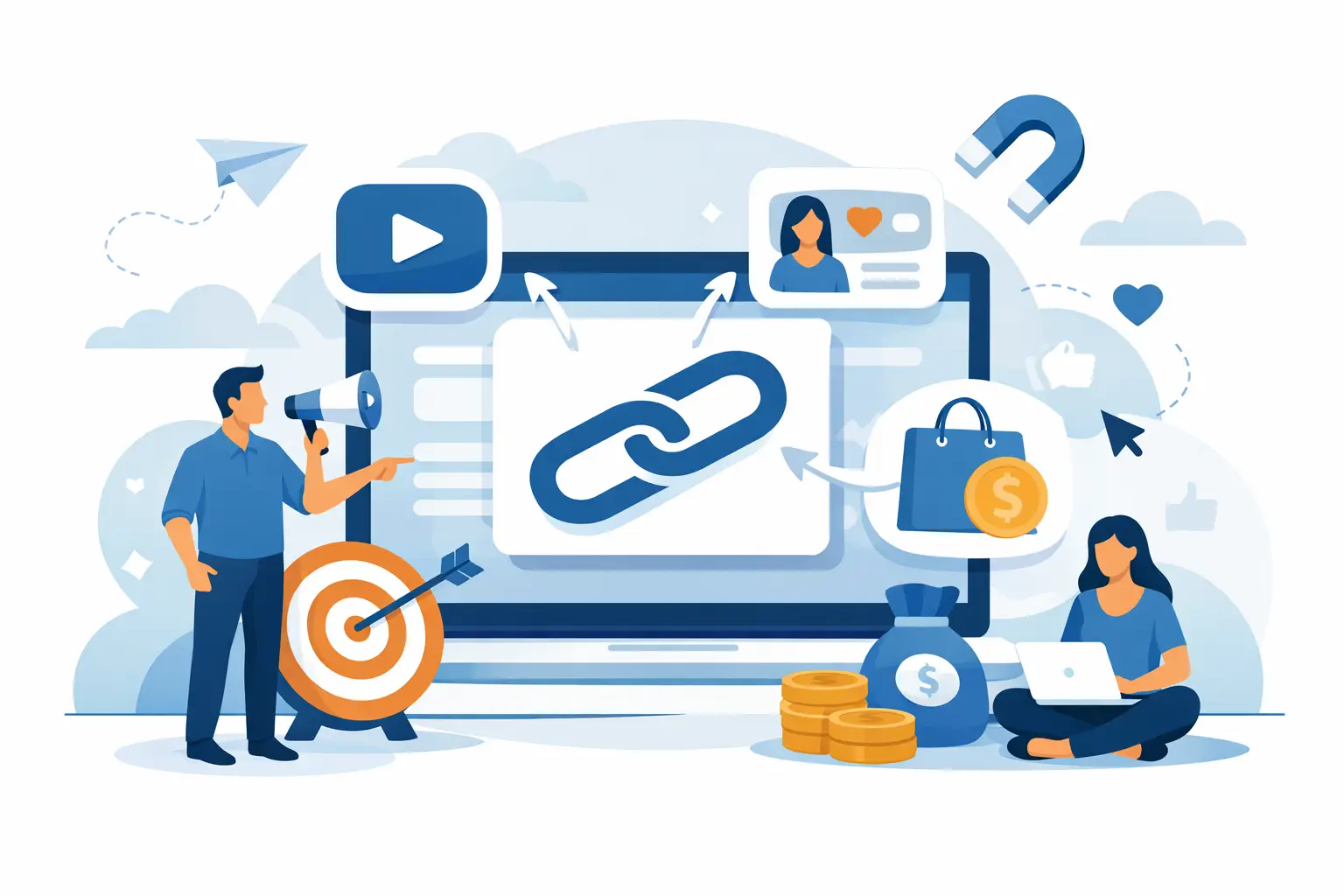
Most people fail to promote affiliate links online for one simple reason – they drop links everywhere and hope for luck. That strategy burns traffic, hurts trust, and usually leads to weak commissions. If you want real results, you need a cleaner system: put the right offer in front of the right audience, in the right format, with a reason to click now.
That matters even more if you are a beginner, a side hustler, or a small online business owner working with limited time and budget. You do not need a giant following. You do not need expensive ads on day one. You do need consistency, visibility, and traffic sources you can actually control.
Why most affiliate promotion falls flat
Affiliate marketing sounds simple because, on paper, it is. Share a link, get a click, earn a commission. But the gap between sharing and earning is where most people lose momentum.
The first problem is random promotion. Posting the same link in social comments, forums, or low-quality traffic exchanges may create views, but views alone do not pay. If the audience is not interested, your click-through rate drops. If the landing page is weak, conversions stall. If people do not trust the source, they scroll past without thinking twice.
The second problem is sending cold traffic directly to an affiliate page without context. People rarely buy because they saw a bare link. They buy because something around that link made the offer feel useful, timely, or worth testing.
The third problem is relying on one method. A single traffic source can work, but it also creates risk. Algorithms change. Engagement dips. Costs rise. Smart promoters build multiple channels so one weak week does not shut down their income.
How to promote affiliate links online without wasting traffic
The fastest way to improve your results is to stop thinking about links and start thinking about placement. Your link is the final step, not the whole strategy.
Good placement starts with matching the offer to intent. If you are promoting a business tool, put it in front of people who already want more traffic, more leads, or more sales. If you are promoting a beginner-friendly income platform, speak to people looking for simple online earning options, not advanced media buyers hunting for enterprise software.
That sounds obvious, but this is where commissions are won. Tight relevance beats broad reach almost every time.
You also want your promotion to feel native to the platform. On social media, short curiosity-driven posts often work better than hard sales copy. In a blog article, educational content usually performs better because readers want a reason before they click. In communities and discussion spaces, direct answers beat hype.
The big goal is simple: make the click feel like the next logical move.
Build around content, not just clicks
If you want affiliate income that lasts, content gives you better leverage than scattered promotion. It creates repeat exposure, builds trust, and keeps working after you post it.
For beginners, that content does not need to be complicated. A short review, a results-based post, a comparison, a tutorial, or a problem-solution article can all move traffic. What matters is clarity. Tell people what the offer is, who it helps, what problem it solves, and why it is worth their attention.
This is especially effective when you focus on practical outcomes. People respond to clear benefits like saving time, getting more traffic, earning recurring commissions, or finding low-cost ways to advertise offers. They respond far less to vague claims.
If you are using short-form platforms, keep the message even tighter. Lead with the problem. Add one concrete benefit. End with a direct call to action. That structure is easier to repeat, and repeatable promotion is what builds momentum.
The best traffic sources depend on your starting point
There is no single best way to promote affiliate links online. The right mix depends on your budget, your confidence level, and how quickly you want data.
Free traffic is slower but accessible. Social posting, community participation, short videos, and beginner blog content can all work if you are willing to stay consistent. The trade-off is time. You may need weeks of testing before you know what angle gets clicks.
Paid traffic is faster but less forgiving. If your message is off, you can burn money quickly. For new affiliates, that usually means starting small and focusing on lower-risk visibility methods instead of jumping into high-cost ad campaigns too early.
This is where all-in-one earning and promotion environments can be useful. If a platform lets you both earn and advertise in the same place, the math becomes more beginner-friendly. Instead of funding all promotion out of pocket, you can offset some of your activity through simple online earning tasks while also placing offers in front of an active user base. For people who want convenience and multiple income paths, that is a practical advantage.
Use pre-selling to improve conversions
Pre-selling is the difference between traffic and buyer-ready traffic. It means warming people up before they hit the affiliate page.
You can do that with a short article that explains why a tool stands out, a simple post that shows one benefit you liked, or a direct message to your audience that frames the offer around a specific need. You are not trying to write a novel. You are removing uncertainty.
If someone clicks your link already understanding what they are about to see, conversions usually improve. Not always, because some offers are weak no matter what you do, but often enough that this step is worth building into every campaign.
A good pre-sell also filters bad clicks. That matters. More clicks are not automatically better. Better-fit clicks are.
Focus on recurring opportunities when possible
Not all affiliate offers are equal. One-time payouts can be useful, especially for quick wins, but recurring commissions often create stronger long-term income.
That does not mean every recurring offer is good. Some have poor retention, weak value, or inflated claims that lead to cancellations. But when the product is relevant and people keep using it, recurring commissions can turn a single conversion into months of revenue.
For side hustlers and beginners, this changes the game. Instead of starting from zero every month, your past effort can keep producing. That is one reason membership-based offers and affiliate-style recurring systems attract so much attention.
If you choose this route, be more selective with what you promote. Retention depends on real user value. If the offer helps people earn, advertise, save time, or grow visibility in a way they can actually use, your chances improve.
Track what earns, not what feels busy
A lot of affiliate activity looks productive without producing income. Posting ten times a day can feel like progress. So can designing banners, rewriting captions, or testing new hooks endlessly. But if none of that leads to clicks and conversions, it is just motion.
Track the basics. Which platform sends clicks? Which message gets attention? Which offer converts? Which placement gets ignored? You do not need enterprise analytics to improve. You need enough data to stop repeating weak moves.
Patterns show up faster than most people think. One traffic source may bring fewer clicks but far better conversion quality. One piece of content may outperform everything else because it speaks to a specific need. One offer may get attention but not sales, which tells you the problem is likely on the landing page or with the offer itself.
That is how smart affiliate promotion scales – not by doing more of everything, but by doing more of what already shows promise.
Common mistakes that quietly kill commissions
The biggest mistake is impatience. People try one platform for three days, get no sales, then jump to another. That resets the learning cycle every time.
The next mistake is weak targeting. Broad traffic feels exciting, but targeted traffic usually pays better. A smaller, more relevant audience can outperform a larger uninterested one all day.
Another common issue is poor offer selection. If the product is confusing, overpriced, or irrelevant to your audience, promotion gets harder no matter how good your copy is.
Then there is overpromotion. If every post is just a pitch, people tune out. Mix direct offers with useful content, quick insights, short tips, or simple observations from your own experience. That balance keeps your promotion from feeling like noise.
A smarter way to grow your affiliate reach
If you want stronger results, think beyond the link itself. Build a simple repeatable system. Choose offers that match your audience. Use traffic sources you can sustain. Pre-sell before the click. Track results and keep what works.
For many users, the easiest starting point is a platform that combines visibility, earning options, and recurring promotion tools in one place. Sumrria fits that model by giving users ways to earn, advertise, and grow from a single account instead of stitching together separate systems. That does not remove the need for effort, but it does remove a lot of friction.
Affiliate success rarely comes from one lucky post. It comes from steady exposure, better targeting, and smarter promotion choices repeated over time. Start simple, stay visible, and let each click teach you what your next move should be.