
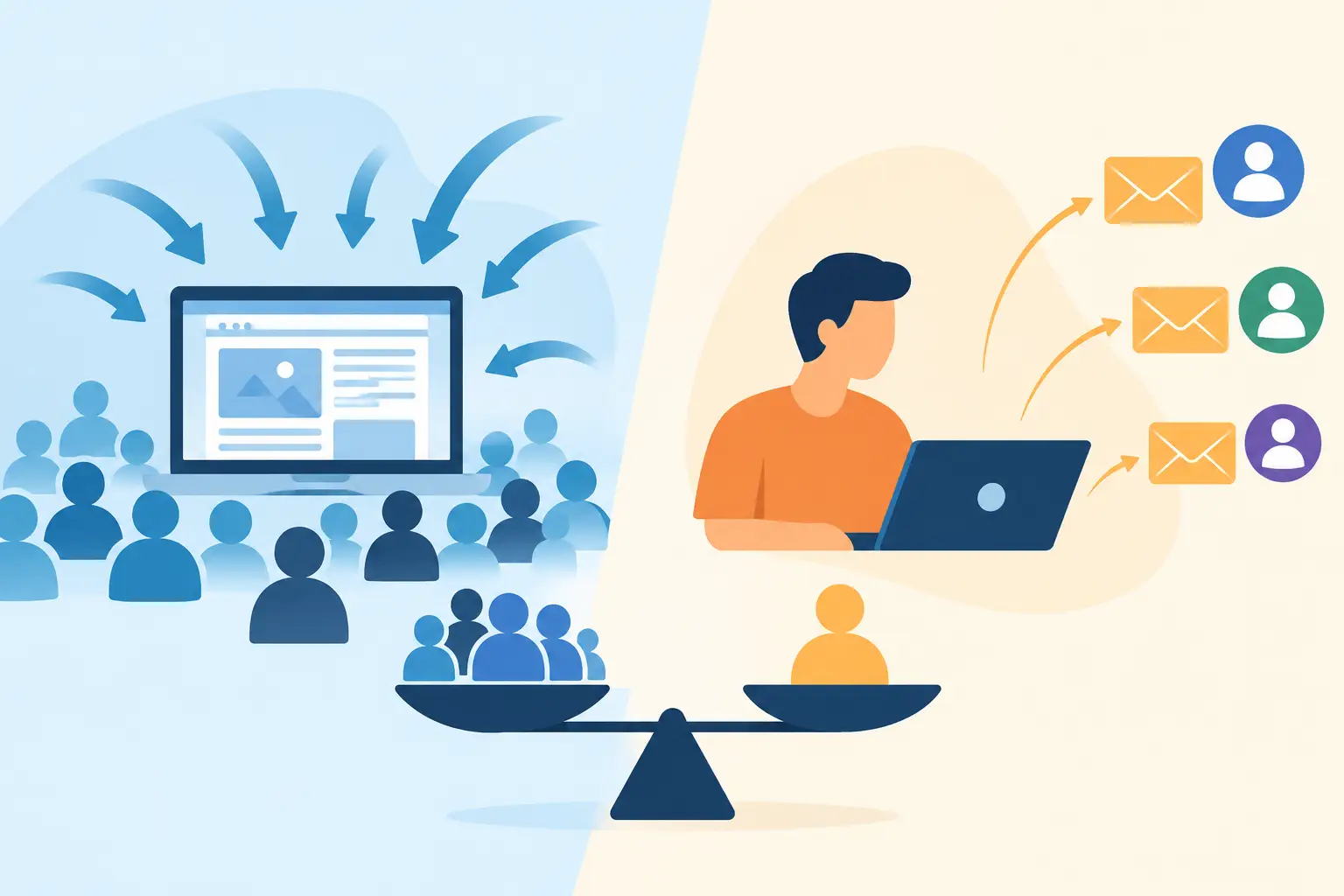
A cheap click can feel like a win until you look at your sign-ups, sales, and follow-up results. That is the real question behind traffic exchange versus solo ads: do you need more exposure, or do you need visitors who are already interested in what you offer? Both methods can put your link in front of people quickly. They do not produce the same kind of attention.
For online earners, affiliate promoters, and small business owners, the smarter choice depends on your goal, your budget, and how ready your page is to convert. Use the wrong traffic source and you may pay for activity without building momentum. Use the right one and even a modest campaign can grow your list, generate commissions, or create valuable testing data.
Traffic Exchange Versus Solo Ads: The Core Difference
A traffic exchange is built around participation. Members view websites, ads, banners, or promotional pages from other members and earn credits that can be used to send visitors to their own pages. The audience is active because they are completing a task, earning credits, exploring opportunities, or looking for ways to promote their own offers.
Solo ads work differently. You pay a list owner, publisher, or email marketer to send a dedicated email promoting your offer to their subscriber list. Your ad is usually the main focus of that email, which gives you more direct access to an audience selected by the seller.
The biggest difference is intent. Traffic exchange visitors often arrive because they are earning, browsing, or completing an action inside a platform. Solo ad visitors arrive because they opened an email and chose to click. That does not automatically make solo ads better. It means you need to match the source to the job.
If your immediate goal is broad exposure, offer testing, or promoting an opportunity that fits an earning-focused audience, traffic exchange can be highly useful. If your goal is building an email list from a specific niche or driving warmer prospects into a funnel, a well-vetted solo ad may have a stronger chance of producing higher-intent leads.
When Traffic Exchange Makes Sense
Traffic exchanges are often the more accessible starting point. You can earn credits through platform activity, buy credits, or use membership benefits that increase your promotional reach. That makes this model attractive when you want traffic without committing a large budget before you know whether your headline, offer, or landing page works.
It is especially useful for offers with a simple next step. A free lead magnet, a giveaway entry, a low-friction email opt-in, a free trial, or an opportunity page can perform better than a complicated sales page. The visitor needs to understand the value quickly. Long pages, vague claims, and multiple competing calls to action usually waste the opportunity.
Traffic exchange can also support repeat visibility. A visitor may not act on the first view, but consistent exposure can help people recognize your brand or offer. This matters when you are promoting something that needs trust, such as a membership, recurring commission opportunity, digital product, or new online business.
The trade-off is that not every visitor will be in buying mode. Many exchange users are there to promote their own links or earn rewards. Expect visibility and clicks, but do not assume every click is a qualified lead. Track your results and judge traffic by opt-ins, sales, and engagement, not by page visits alone.
When Solo Ads Are Worth the Cost
Solo ads can provide speed when you have a clear audience match. If you sell a beginner-friendly marketing course, for example, a list made up of people interested in side hustles, affiliate marketing, or online business may be relevant. A dedicated email can put your offer in front of people who have already subscribed to receive similar content.
The main advantage is targeting through the list owner. A strong seller knows their audience, can describe how subscribers joined the list, and can tell you what types of offers have performed well. You are paying for more than clicks. You are paying for access to an established relationship between the email sender and their subscribers.
But solo ads are not a shortcut around funnel quality. A weak headline, confusing landing page, or generic offer can still produce disappointing results. In fact, paid email traffic can expose those problems faster because every visitor costs more.
Quality also varies widely. Some sellers have engaged, niche-specific lists. Others may have inactive subscribers, broad audiences, or lists that receive too many promotional emails. Ask direct questions before you buy: How was the list built? What niche is it in? How often does it receive promotional emails? What is the expected number of unique clicks? Will you receive a report after the campaign?
Do not treat a seller’s promised click count as a promise of conversions. A solo ad campaign may send real clicks and still fail if the audience does not connect with your offer. That is why a small test order is usually smarter than putting your entire budget into one send.
Cost, Control, and Risk
Traffic exchange usually wins on affordability and volume. It can be a practical way to generate ongoing visitors, test several landing pages, and keep your offer visible. For a new promoter with limited cash, that lower barrier is a major advantage.
Solo ads usually cost more per visitor, but they can offer more control over who sees the message when the list is well matched. You may be able to approve the email copy, choose a send date, and focus on a niche that fits your product. The risk is concentrated: if the vendor or list is a poor match, your spend can disappear quickly.
Neither method should be measured only by cost per click. A $0.10 visitor who never opts in is not cheaper than a $1 visitor who joins your list and later buys. Look at cost per lead, lead quality, email engagement, and customer value. If you promote affiliate offers, also track whether leads take the required next action rather than simply filling out a form.
Build the Page Before You Buy the Traffic
The traffic source is only half the campaign. Your landing page determines whether attention turns into a result. Before sending visitors, make sure the page has one clear promise, one primary call to action, and a benefit that can be understood in seconds.
For exchange traffic, keep the message direct. Tell visitors exactly what they receive and what action to take. For solo ad traffic, match the landing page to the email message. If the email promises a free training, do not send people to a general homepage filled with unrelated choices.
Use tracking from the start. Create separate tracking links or dedicated landing pages for each campaign type. Then compare visitor volume, opt-in rate, cost per lead, confirmation rate, email opens, and sales. This prevents guesswork and gives you a real basis for scaling.
A simple test can reveal a lot. Run one version of your page with a strong benefit-driven headline, then test another version with a more specific result. Change one major element at a time. If you change the traffic source, headline, offer, and button text all at once, you will not know what caused the result.
A Better Strategy: Use Each Tool for Its Strength
The smartest answer is often not traffic exchange or solo ads. It is using each channel where it has the most value.
Use traffic exchange to build visibility, test headlines, rotate multiple offers, and collect early data without putting heavy pressure on your budget. It can also be a natural fit for promoters targeting people interested in earning opportunities, affiliate tools, and online promotion. Platforms such as Sumrria bring earning activity and promotional visibility into the same member community, which can make this kind of campaign easier to manage.
Use solo ads after your offer has shown signs of converting. Once you know your page earns opt-ins and your follow-up emails produce engagement, paying for a more targeted audience becomes less of a gamble. You are not buying clicks to hope for a result. You are scaling a process that already has evidence behind it.
This sequence protects your budget. First, prove the offer. Then, increase the quality and volume of traffic. Keep testing as you scale because an offer that works with one audience may need a different angle for another.
Choose Based on Your Next Goal
Choose traffic exchange when you need affordable exposure, want to test a new page, have time to participate, or are promoting an offer that makes sense to an earning and marketing audience. Choose solo ads when you have a proven funnel, enough budget for a controlled test, and access to a list that closely matches your offer.
The winning move is not chasing the largest number of visitors. It is creating a simple offer, tracking every step, and putting your next dollar behind the source that brings people who actually take action.