
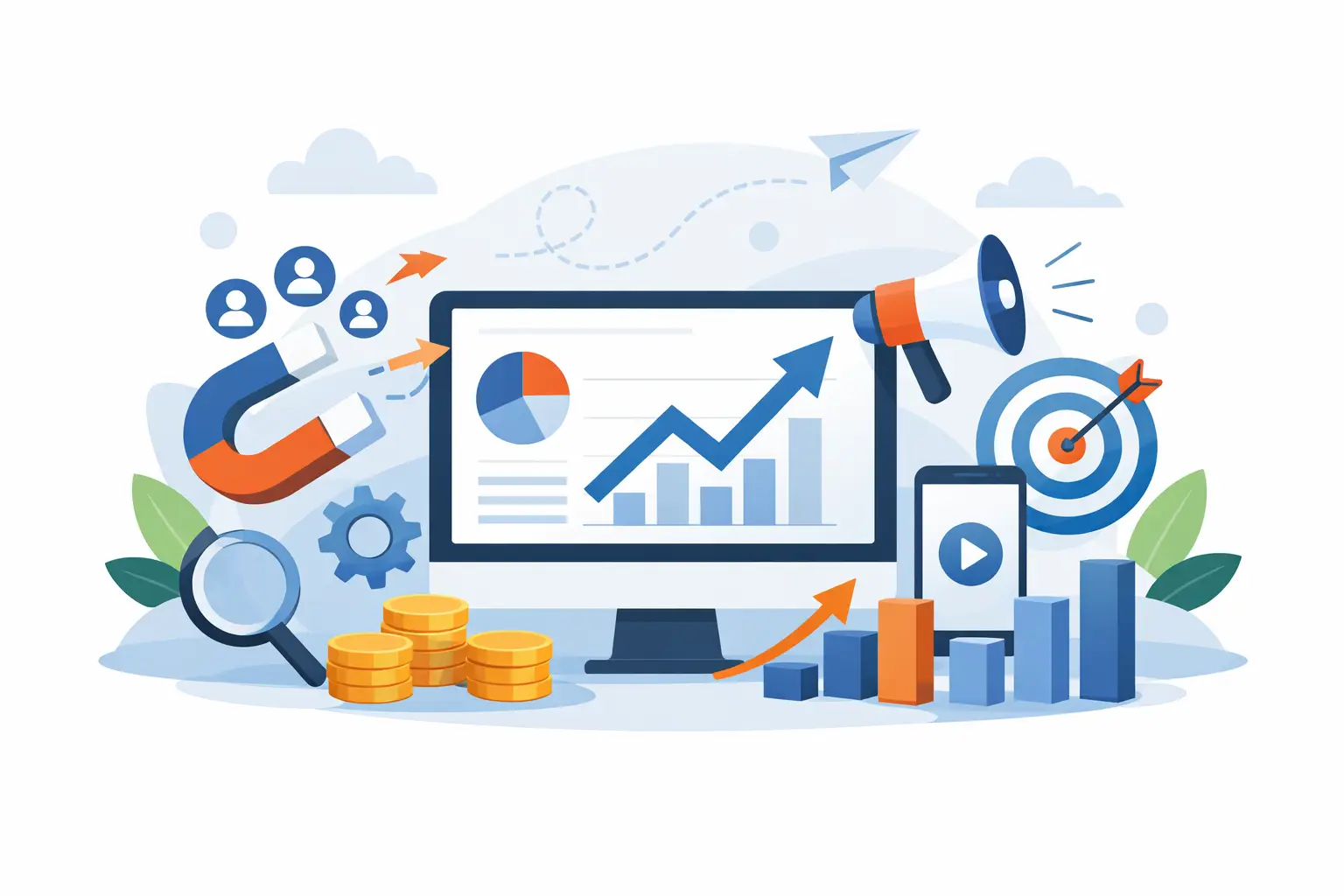
Getting clicks is easy to talk about. Getting the right people to see an offer, take action, and return is where most promotions either grow or stall. This traffic generation tools review focuses on what matters for online earners, affiliate promoters, and small business owners: affordable reach, simple setup, measurable activity, and traffic that matches the goal of your campaign.
The best tool is not automatically the one with the biggest audience or the flashiest dashboard. It is the one that puts your offer in front of people who have a reason to care, while giving you enough control to test, adjust, and improve. If you are promoting a landing page, product, referral offer, or new website, choose your traffic source based on the action you need next.
What Makes a Traffic Tool Worth Using?
A useful traffic tool does more than send visitors to a URL. It helps you control where attention goes and learn whether that attention is valuable. For a beginner, the biggest win is often simplicity: create an ad, choose basic targeting or placement options, set a budget, and monitor results without needing a marketing degree.
Start by defining the job of the traffic. A product page needs buyers. A lead capture page needs email signups. An affiliate offer may need curious visitors who are open to learning more. A new site may simply need visibility and early user feedback. These are different goals, so they should not all be judged by the same metric.
Click volume can be helpful, but clicks alone are not proof of success. Watch what happens after the visitor arrives. Are they staying on the page? Are they submitting a form, joining a list, making a purchase, or moving to the next step? A smaller stream of interested visitors can beat a large pile of low-intent clicks every time.
Traffic Generation Tools Review: The Main Options
Most promoters will encounter four broad types of tools. Each can earn a place in your strategy, but each comes with trade-offs.
Internal advertising platforms
Internal advertising platforms place your offer in front of an existing member community. This can include banner placements, traffic rotation, promoted listings, ad views, and featured exposure. They are often easier to start with than major ad networks because the process is built around straightforward promotion rather than complex campaign management.
This option works especially well for affiliate marketers, side hustlers, and digital product promoters who want affordable visibility without committing to a large daily ad budget. It can also be useful for testing headlines and landing pages before scaling elsewhere.
The trade-off is audience fit. An internal community may be active and engaged, but it is still a specific audience with its own interests. Your message needs to match what members are looking for. An offer about earning opportunities, tools, memberships, or online services may fit naturally. A highly specialized local service may not.
Sumrria fits this category by bringing traffic rotation, banner advertising, product promotion, and earning activities into one membership environment. For users who want to promote offers while also completing tasks and building recurring referral commissions, that combined model can reduce the need to manage several separate platforms.
Search advertising
Search ads can be powerful because they reach people who are already looking for an answer, product, or service. Someone searching for a specific solution may be closer to taking action than someone scrolling through content or viewing an ad rotation.
The challenge is competition. High-intent keywords can become expensive quickly, especially in finance, software, health, marketing, and e-commerce. Search campaigns also require careful keyword selection, negative keywords, and landing pages that closely match the searcher’s intent. Beginners can get results, but they should start narrow and avoid trying to target every possible phrase at once.
Use search advertising when your offer solves a clear problem and you can describe that solution in terms people actively search for. It is less ideal for vague offers that need a lot of explanation before the visitor understands the value.
Social media promotion
Social platforms are built for discovery. Their targeting options can help you reach people by interests, behaviors, location, age, or engagement patterns. Social traffic can be a strong choice for visual products, personal brands, easy-to-understand offers, and promotions that benefit from a quick video or bold creative.
The downside is that people are usually not on social media to shop or sign up immediately. Your ad has to interrupt attention without feeling confusing or overly aggressive. A direct offer can work, but many campaigns perform better when they first give visitors a reason to learn more, watch a short demonstration, or claim a simple benefit.
For a limited budget, test several creative angles instead of changing everything at once. One campaign might focus on saving money, another on earning potential, and another on convenience. Let the data show which message gets the strongest response.
Content and referral traffic
Content-driven traffic comes from useful posts, videos, email messages, communities, and recommendations. Referral traffic can be slow at the beginning, but it often becomes more valuable over time because visitors arrive with context and trust.
This route demands more effort than buying a placement. You need to create content that answers real questions, explains an offer honestly, and gives people a reason to come back. But it can be an excellent long-term asset. A helpful review, tutorial, or comparison can continue sending qualified visitors long after it is published.
The strongest approach is often a mix: use paid exposure for faster testing, then build content and referrals around the messages that prove they can convert.
How to Compare Tools Without Wasting Your Budget
Before committing money, compare tools using the same basic questions. First, ask who will see the promotion. “More traffic” has little meaning if the visitors have no reason to engage with the offer.
Next, look at placement control. Can you choose banner sizes, rotation settings, categories, audience interests, or campaign duration? More control is useful, but only if you will use it. A simple platform with clear options can outperform an advanced platform that feels too complicated to manage.
Then consider reporting. At minimum, you should be able to track impressions, clicks, and the destination page you are promoting. Your own landing page should also measure the action that matters, such as registrations, purchases, email opt-ins, or referral signups. This is how you separate attention from actual opportunity.
Finally, calculate the real cost of the result. If you spend $20 and receive 200 clicks, the cost per click is easy to see. But if none of those visitors sign up, that click cost is not the full story. Compare the cost per lead, sale, or active member whenever possible.
Build a Simple Test Before You Scale
A small test protects your budget and gives you useful direction. Choose one offer, one landing page, and one clear action. Do not send traffic to a cluttered page with five competing links and hope visitors figure it out.
Your landing page should answer three questions quickly: what is this, who is it for, and what should I do next? Use a specific headline, a short explanation of the benefit, and one visible call to action. If the offer requires a signup, say what the visitor gets after signing up. Clear beats clever when you are paying for attention.
Run the test long enough to collect meaningful activity, then make one improvement at a time. Change the headline, creative, audience, or call to action, but avoid changing all four at once. Otherwise, you will not know what caused the result.
If a campaign receives impressions but few clicks, improve the ad message or image. If it gets clicks but no conversions, review the landing page, offer match, and page speed. If it converts but costs too much, narrow the audience or test a lower-cost placement. Growth comes from these small decisions repeated consistently.
The Traffic Mistakes That Slow Down New Promoters
Many beginners chase cheap clicks before they have a clear offer. Others promote an affiliate link directly with no explanation, no tracking, and no follow-up. That can create activity, but it rarely builds a dependable system.
Avoid making income claims that your page cannot support. Overhyped messaging may earn a quick click, yet it can reduce trust and bring the wrong visitors. Be direct about the opportunity, product, or service. The people who stay are more likely to become real leads, customers, or long-term referrals.
Also, do not rely on one traffic source forever. A single platform can change its pricing, audience behavior, or placement options. Keep a simple record of what works, build your email list where appropriate, and test more than one channel as your budget grows.
Traffic is not just a number on a dashboard. It is a chance to earn attention from someone who could become a customer, subscriber, partner, or repeat visitor. Start with a clear goal, test one message at a time, and put more of your budget behind the traffic that creates real next steps.