
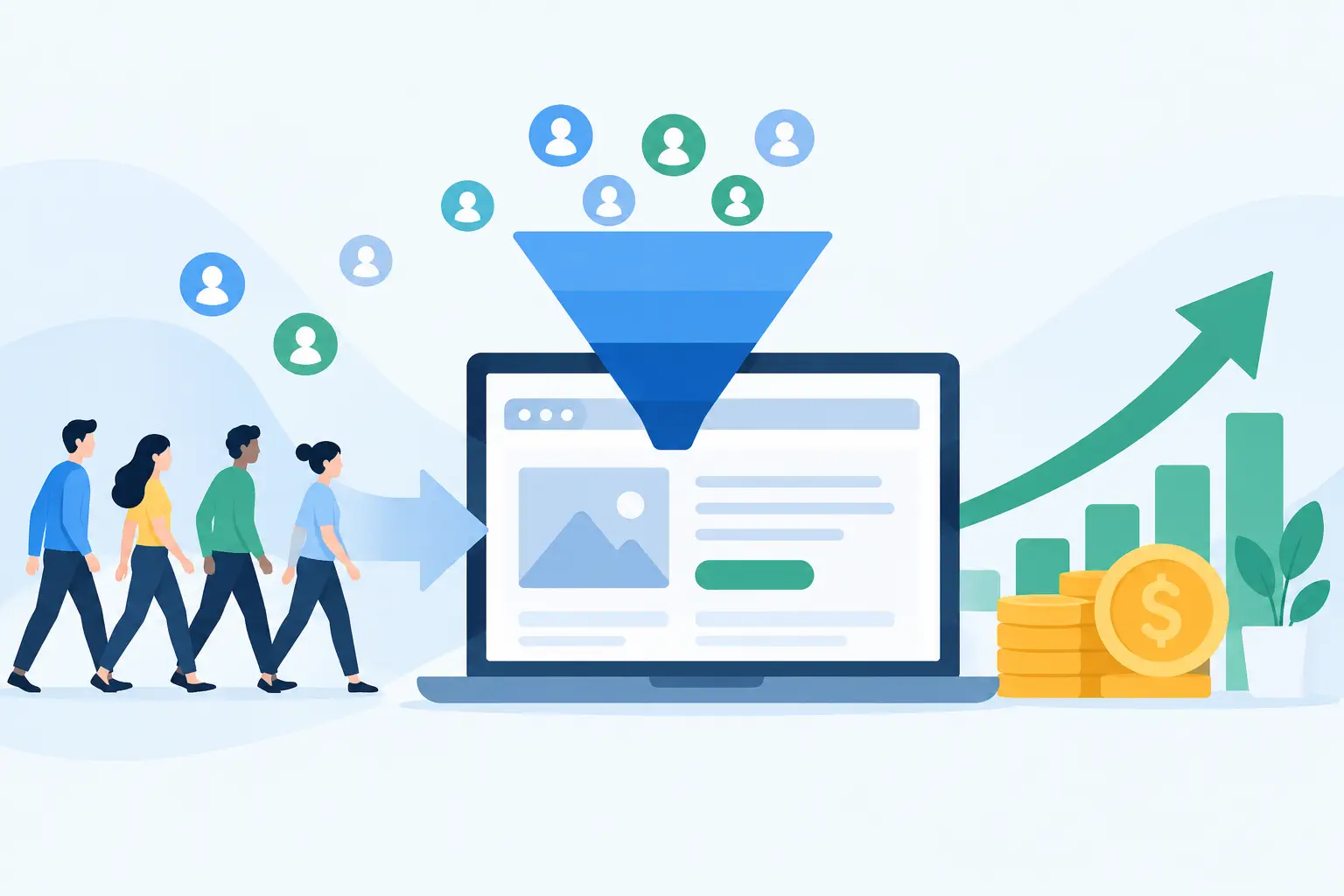
A website conversion traffic guide is not about chasing the biggest visitor number on your dashboard. It is about getting the right people to a page that gives them a clear reason to act. If 1,000 people visit and nobody joins, buys, opts in, or clicks through, you do not have a traffic win. You have a costly distraction.
For online earners, affiliate promoters, and small business owners, the goal is simple: send interested visitors to a focused offer, make the next step easy, and measure what produces results. More traffic can grow your business, but better conversion turns that traffic into real momentum.
Start With One Conversion Goal
Every page needs one primary job. A visitor should know within seconds whether they are supposed to sign up, claim an offer, view a product, join a list, request information, or start a free account.
Trying to make one page do everything usually weakens every action. A landing page crowded with five buttons, multiple unrelated offers, and long explanations can create hesitation. People do not need more choices when they arrive from an ad or promotional campaign. They need a confident next step.
Choose the conversion that matters most for that page. If you are promoting a recurring commission opportunity, your main goal may be a free registration. If you sell a digital product, it may be a purchase. If your offer needs more trust before a sale, collecting an email address may be the smarter first conversion.
Your page should answer three questions quickly: What is this? Why should I care? What do I do next?
Know Which Traffic Can Actually Convert
Not all clicks have equal value. A cheap visitor who has no interest in your offer can lower your conversion rate and waste your promotion budget. A smaller stream of visitors who already want a solution can produce far more sign-ups and sales.
Match your traffic source to the intent behind your offer. People clicking a banner about earning online may be interested in an earning platform, affiliate opportunity, survey site, or promotional tool. They may not be ready for a high-ticket coaching program or a product that solves a completely different problem.
Before you buy or generate traffic, define your ideal visitor in practical terms. Consider what they want, what problem they are trying to solve, what device they use, and what promise made them click. This keeps your message consistent from the first impression to the conversion page.
Traffic from an active promotional community can be useful when your offer is clear and relevant to that audience. For example, Sumrria gives users a place to earn while promoting websites, products, and offers to other active members. That kind of audience fit can be valuable, but it still depends on your page doing its job after the click.
Build a Page That Makes the Offer Obvious
Your headline is the first conversion tool on the page. It should state the outcome, not hide it behind vague marketing language. Compare “Welcome to Our Platform” with “Promote Your Offer and Earn Recurring Commissions.” The second version tells visitors what is in it for them immediately.
Follow the headline with a short explanation that removes confusion. Explain who the offer is for, what they receive, and what action starts the process. Keep the language plain. Visitors should not have to decode industry terms or search the page for the real benefit.
Strong conversion pages usually include these four elements:
- A benefit-led headline that matches the traffic source
- A simple explanation of how the offer works
- Proof that reduces doubt, such as results, features, or clear process details
- One visible call to action repeated at natural points on the page
Use visuals only when they support the offer. A screenshot, product image, simple earnings dashboard example, or short demonstration can help visitors understand faster. Decorative images that push the call to action below the fold can hurt more than they help.
Make Your Call to Action Easy to Say Yes To
A call to action should tell people exactly what happens next. “Get Started Free,” “Create Your Account,” “See Available Plans,” or “Promote Your Link” are clearer than “Submit” or “Click Here.” Specific language makes the action feel lower-risk and more useful.
Reduce friction around the button. If someone must complete a long form just to see basic information, many will leave. Ask for only what you need at that stage. A free signup may require very little. A purchase may require more details, but the checkout should still feel quick and organized.
It also helps to set expectations next to the button. A short note such as “Free account required,” “No credit card needed,” or “Access begins after registration” can prevent uncertainty. Use only statements that are accurate. Trust built before the click is more valuable than a signup that immediately disappears.
Improve the Traffic-to-Page Match
One of the fastest ways to lose conversions is making a promise in your promotion that the landing page does not repeat. If your ad says “Get More Exposure for Your Website,” the page should lead with website exposure, not an unrelated company story.
This is called message match, and it matters because visitors make snap decisions. They clicked for a reason. When they arrive and see the same benefit, they are more likely to continue. When the page feels different from the promotion, they often leave without reading further.
Create separate landing pages when you promote distinctly different angles. One visitor may care about earning from simple online tasks. Another may want affordable website traffic. A third may be focused on referral commissions. Sending all three to the same general page can work, but tailored pages often convert better because the message is more relevant.
There is a trade-off: more pages require more setup and tracking. Start with your best offer and strongest traffic source first. Expand only after you know what message earns attention.
Track the Numbers That Lead to Growth
Do not judge a campaign only by clicks. Track how many visitors become leads, registrations, sales, or other meaningful actions. Your conversion rate is the percentage of visitors who complete that action.
For example, if 100 people visit your page and four register, your conversion rate is 4 percent. If you improve the page and six register from the same 100 visitors, you have increased results without buying more traffic.
Watch these signals closely: visitor volume, conversion rate, cost per conversion, and the source of each conversion. A source that sends fewer visitors may still be your winner if those visitors take action at a higher rate. Likewise, a page with a high click-through rate but weak signup results may be attracting curiosity rather than real intent.
Give campaigns enough data before making big changes. Turning off a source after a handful of clicks can be premature. At the same time, do not keep spending on a campaign that consistently produces no meaningful activity. Test with a defined budget, review the outcome, then make one change at a time.
Test Small Changes With a Clear Purpose
Conversion improvement is rarely one dramatic fix. It is often a series of small upgrades: a more specific headline, a stronger button, a shorter form, a better image, or a clearer explanation of the value.
Test one major element at a time whenever possible. If you change the headline, images, button text, audience, and traffic source all at once, you will not know what caused the result. Keep a simple record of what you tested, when you tested it, and what happened.
Start with high-impact areas. Improve the headline before worrying about button color. Clarify the offer before adding more page sections. Make the traffic source more relevant before assuming your entire business model is the issue.
Turn New Visitors Into Repeat Opportunities
A conversion does not always mean an immediate sale. Many visitors need time, proof, or a second look before they act. That is why email follow-up, retargeting where permitted, and useful onboarding matter.
After someone registers or joins your list, give them a clear next action. Show them how to use the offer, where to find the main benefit, and what success looks like. A confusing first experience can erase the value of a successful traffic campaign.
Keep building from what your visitors already tell you. The best website conversion traffic strategy is not louder promotion. It is a clear offer placed in front of people who want it, followed by a next step that feels worth taking.